
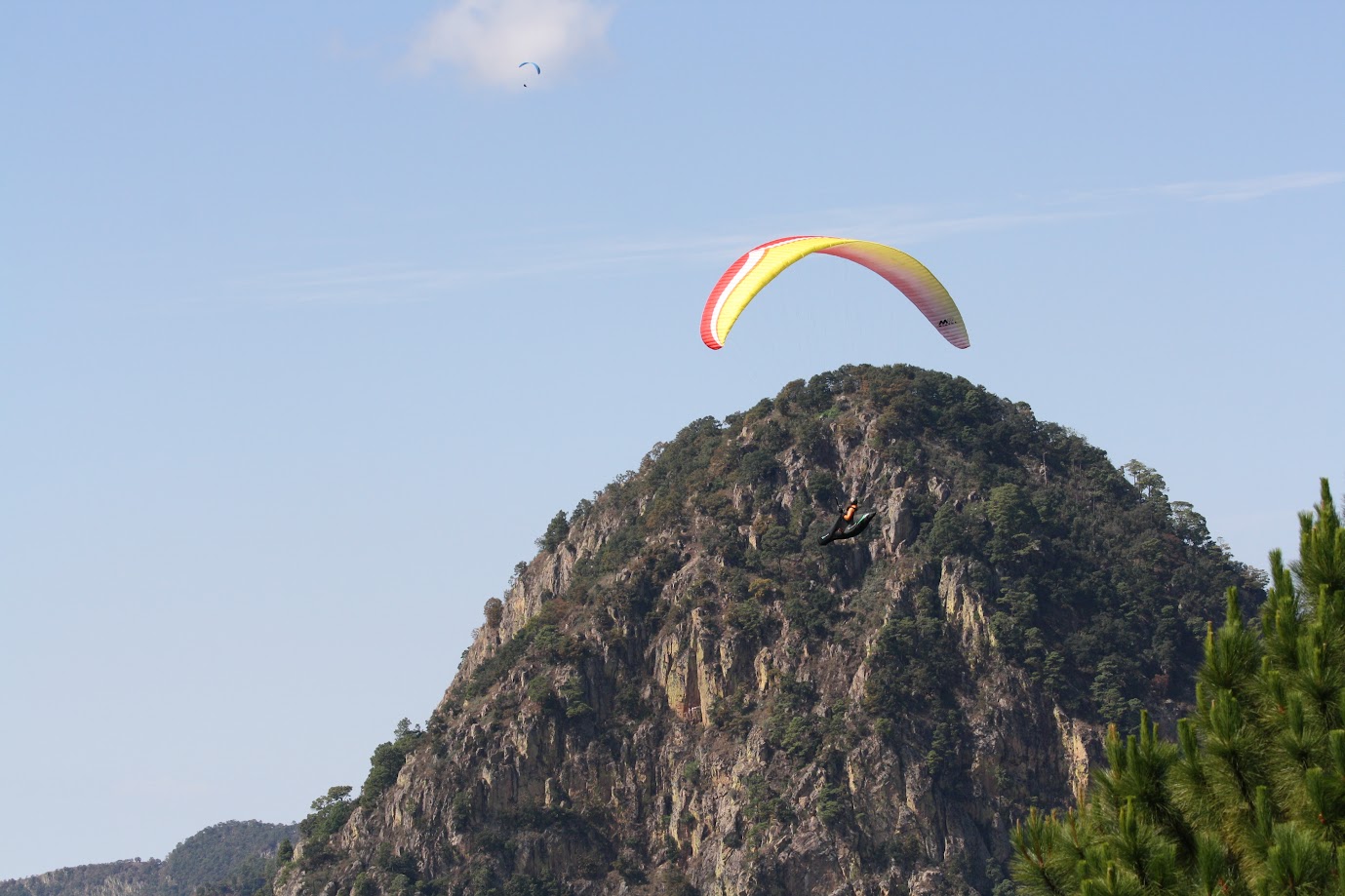
Valle de Bravo is one of the best paragliding destinations in the world. Located two hours west of Mexico City in the State of Mexico, the site offers 300+ flyable days per year, consistent thermal activity, and a charming lakeside town that makes it as enjoyable on the ground as in the air. The primary launch is El Penon, a volcanic peak at 7,600 feet ASL with reliable thermals that cycle on almost exactly at 10am every day. Whether you are a P2 pilot looking to build thermal skills or an experienced XC pilot chasing distance, Valle de Bravo delivers.
This guide covers everything you need to know to plan a paragliding trip to Valle de Bravo - from the launches and landing zones to seasonal conditions, gear, logistics, and what to do when you are not flying. It is written from 25+ years of flying this site and over 10,000 flights in the area.
El Penon Launch
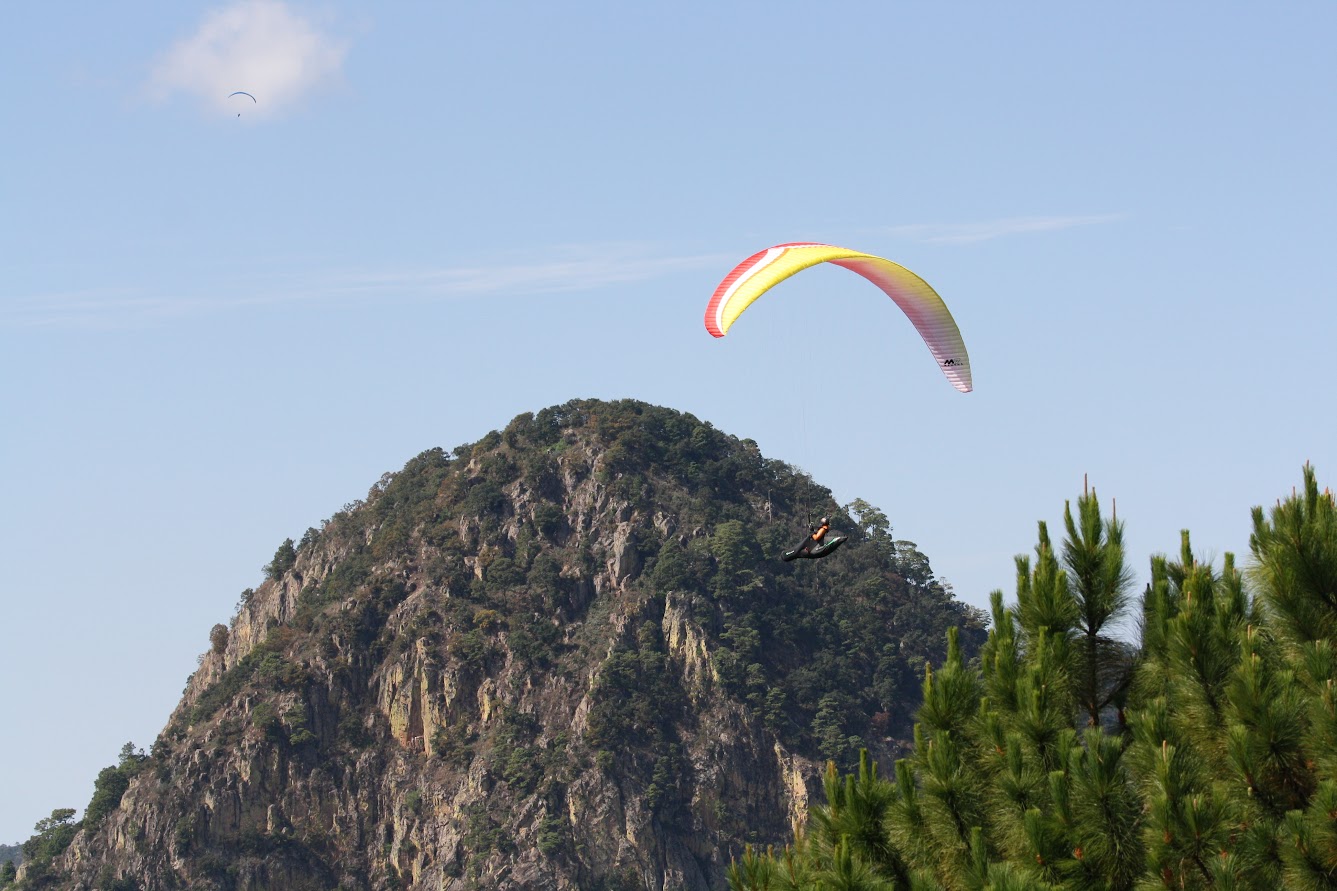
El Penon is the main launch site in Valle de Bravo and one of the most famous paragliding launches in the Americas. It sits on the rim of an ancient volcano at approximately 7,600 feet (2,316 meters) above sea level, overlooking Lake Avandaro and the town of Valle de Bravo below.
The launch faces generally south to southwest and is wide enough to accommodate multiple pilots setting up at once. The terrain drops away cleanly, which means even in light conditions you can get off the mountain without drama. For most pilots visiting for the first time, the launch itself is one of the pleasant surprises - it is friendly, forgiving, and well-maintained by the local flying community.
The Hair Dryer
The most distinctive feature of El Penon is what locals call the "Hair Dryer" - a thermal cycle that kicks on with remarkable consistency at approximately 10:00 AM every morning. The sun heats the dark volcanic rock faces below launch, and the resulting thermal activity is strong, predictable, and well-organized. You can literally set your watch by it.
For visiting pilots, this predictability is a huge advantage. You know when to be on launch, you know when the first thermals will come through, and you know the cycle will sustain through the early afternoon. This is not a site where you sit on launch for three hours wondering if conditions will develop. The Hair Dryer turns on, and everyone goes up.
Getting to Launch
From town, the drive to El Penon launch takes approximately 30-40 minutes on a winding mountain road. If you are flying with Air Damien, daily shuttle service is included. Independent pilots can hire a local driver or arrange transport through the flying club. The road is paved but steep in places - a standard passenger vehicle can make it, but higher clearance is more comfortable.
Club Requirements
To fly El Penon, you need to be a member of the local paragliding club. This is standard practice in Mexico and the membership process is straightforward. Your instructor or guide will typically handle the paperwork for you. Note that the club restricts mid-day flying (roughly 11:00 AM to 2:00 PM) to P4-rated pilots and above during certain conditions. This is a safety measure due to stronger thermal activity during peak hours. See our FAQ page for more details on club rules.
The Fish Bowl
The Fish Bowl is what pilots call the primary flying area directly in front of El Penon launch. It is a bowl-shaped section of terrain that includes ridges, spines, walls, small volcanic mesas, and a prominent rock feature simply called "The Rock." The Fish Bowl is where most thermal flying happens during a typical session.
For visiting pilots, the Fish Bowl is your classroom. The terrain creates multiple thermal triggers that are readable and consistent. You can work thermals along the ridges, practice centering over the volcanic features, and explore the convergence zones where different air masses meet. It is large enough to provide variety but contained enough that you always know where you are relative to the LZs.
Learning to read the Fish Bowl - understanding which features trigger first, how the thermal cycle progresses through the morning, and where the strongest lift tends to develop - is a significant part of what makes a thermalling clinic here so valuable. It is a living textbook of thermal flying.
Landing Zones
The Piano
The Piano is the primary landing zone for El Penon, located approximately 1.5 miles from launch. It gets its name from its piano-like shape when viewed from the air. The Piano is a large, flat field with good approach options from multiple directions. It is the default LZ for most flights and is where the retrieve vehicle picks you up.
The Beach LZ
The Beach LZ (also called the lakefront LZ) is located at Marina Nacional 202, right on the shore of Lake Avandaro. This is the landing zone closest to town and is where the local flying community gathers. The coordinates are 19.183792, -100.127785. It is a larger field with easy approaches and is often used for late-afternoon glass-off flights.
Landing Out
If you miss both the Piano and the Beach LZ, there are fields and open areas in the valley below. Landing out in Valle de Bravo is not as stressful as it might be at other sites - the terrain is generally open and forgiving. However, if you are flying XC, you will want retrieve support. Air Damien's retrieve service tracks pilot positions via GPS and picks you up wherever you land.
Thermal Conditions by Month
Valle de Bravo is flyable year-round, but conditions vary significantly by season. Here is what to expect each month.
November
Peak season begins. The rainy season has ended, skies clear out, and thermal activity becomes consistent and reliable. Temperatures are comfortable - 50-75F (10-24C) at launch altitude. Thermals are moderate strength (2-4 m/s average) and well-organized. Cloudbase typically sits around 10,000-12,000 feet ASL. This is an excellent month for pilots at any level. Read our detailed November conditions guide.
December
The strongest, most consistent conditions of the year. Thermal triggers are reliable, the Hair Dryer cycles like clockwork, and multi-hour flights are common. This is also the most popular month for visiting pilots, so expect busier launches and fuller houses. December is ideal for XC flying - the thermal streets develop well and distances of 30-50km+ are achievable. Read our detailed December conditions guide.
January
Still excellent conditions, very similar to December but with slightly cooler mornings. January is slightly less crowded than December and offers equally good flying. A great month if you want peak-season conditions without holiday crowds.
February
Good conditions continue. Thermals are still consistent but may be slightly less powerful than the Nov-Jan peak. February is a sweet spot for pilots who want reliable flying with smaller groups. Note that some pilots head to Roldanillo, Colombia in February for even stronger XC conditions.
March
The season is transitioning. Conditions are still flyable most days but becoming more variable. Some days are outstanding, others are lighter. March is a good month for pilots who are flexible with their schedule and comfortable with a bit more variability.
April through October
The rainy season. Mornings can be flyable - thermals develop early and conditions can be good until early afternoon when afternoon thunderstorms typically develop. Experienced pilots fly year-round here, but visiting pilots should plan around the November through March season for the most reliable conditions. Air Damien runs trips primarily during the peak season.
Cross-Country Flying from El Penon
Valle de Bravo is not just a local soaring site. The terrain around El Penon creates excellent XC opportunities. Typical routes run along the volcanic ridgelines to the south and west, with thermal triggers spaced at regular intervals along the terrain.
For pilots working on their XC skills, the progression is natural. Start by learning the Fish Bowl thermals, then extend to the ridges beyond, then begin making transitions between thermal sources. The terrain is readable - dark rock faces, ridgelines, and bowl features all generate predictable lift. With radio coaching and a retrieve crew, you can push your distance without worrying about how to get home.
Experienced XC pilots regularly fly 40-60km+ routes from El Penon during peak season. The distance potential is not as extreme as sites like Roldanillo, but the consistency of conditions means you get more flyable XC days per trip than almost anywhere else.
Gear Recommendations
Valle de Bravo thermals are moderate to strong - not as aggressive as Roldanillo or Governador Valadares, but stronger than most US coastal sites. Here is what works well:
- Wing: An EN-B or EN-C wing appropriate for your skill level. Valle is not the place to fly a wing that is too hot for your experience. The thermals are readable but active enough to demand respect.
- Harness: A standard pod harness with a certified reserve parachute. Nothing exotic needed.
- Helmet: Full-face recommended. The sun at altitude is intense and a full-face helmet also protects against insects during long flights.
- Radio: Dual-band VHF radio is essential if you are flying with an instructor. Frequency 144.445 is commonly used. Air Damien provides spare radios if you do not have one.
- Vario: Bring one. Valle thermals are strong enough to feel, but a vario helps you optimize your climb rate and makes the learning process much faster.
- Sun protection: Sunscreen, sunglasses, and a hat or buff. The Mexican sun at 7,600 feet is no joke. Apply sunscreen before launching and carry more in your harness.
- Hydration: Bring water in your harness. Multi-hour flights in warm conditions will dehydrate you faster than you expect.
Getting to Valle de Bravo
Valle de Bravo is located approximately 150 kilometers (93 miles) west of Mexico City. The two main airports are:
- Mexico City International Airport (MEX): The largest and most connected airport. Drive time to Valle de Bravo is approximately 2.5-3 hours depending on Mexico City traffic. Toll roads are available and recommended.
- Toluca International Airport (TLC): A smaller airport closer to Valle de Bravo. Drive time is approximately 1.5-2 hours. Fewer flight options from the US but a shorter drive.
If you are flying with Air Damien, airport pickup and return transport is included in all trip packages. For independent travelers, you can arrange a private driver, rent a car, or take a bus from Mexico City to Valle de Bravo (first-class bus service is comfortable and reliable).
Where to Stay
Valle de Bravo has accommodation options ranging from budget hostels to boutique hotels. The town is compact enough that location is not a major concern - everything is within a short walk or drive.
If you book a trip with Air Damien, housing is included. We use a shared house near the flying site and town center - comfortable private rooms, common areas for debriefing and socializing, and walking distance to restaurants and the lake.
For independent pilots, look for accommodations in the town center or near the lakefront. Hotels and Airbnbs are available at various price points. The town gets busy on weekends (it is a popular getaway for Mexico City residents) so weekday availability is generally better.
The Town of Valle de Bravo
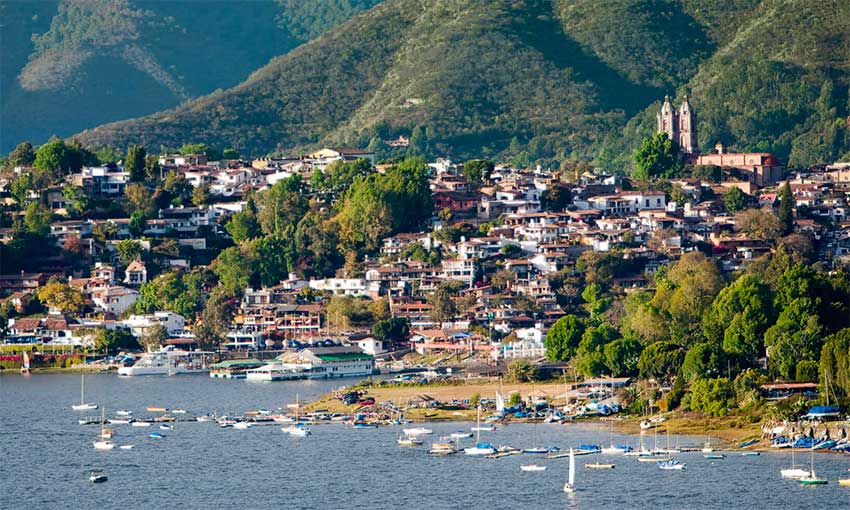
Valle de Bravo is a colonial lakeside town that has its own appeal independent of the flying. Cobblestone streets wind through the town center past colorful buildings, shops, and restaurants. The weekly market (tianguis) is worth visiting for local crafts, produce, and street food.
Lake Avandaro sits at the base of the mountains and offers kayaking, paddleboarding, and lakeside dining. The town has excellent restaurants ranging from casual taquerias to upscale Mexican cuisine. Nightlife exists but it is mellow - this is a town that wakes up early to fly, not one that stays up late to party.
For pilots on rest days, the town provides plenty to do. Walk the market, eat by the lake, explore the surrounding countryside, or simply sit at a cafe and watch gliders come in to land at the Beach LZ. Valle de Bravo is a place you genuinely enjoy being, not just a place you endure between flights. Check out our photo gallery for a taste of life here.
Local Clubs and Rules
Flying at El Penon requires membership in the local paragliding club. The club manages launch access, LZ maintenance, and flying rules. Key rules to know:
- Club membership is required. Your guide or instructor will typically arrange this for you.
- Mid-day flying (approximately 11:00 AM to 2:00 PM) is restricted to P4-rated pilots and above during strong thermal days. This is a safety measure, not arbitrary gatekeeping.
- Standard launch etiquette applies - set up efficiently, communicate with other pilots, and yield to pilots who are ready to launch.
- The Piano and Beach LZ have standard approach patterns. Follow them.
- A signed waiver is required before your first flight. This is mandatory per USHPA guidelines.
Gear Shops and Repairs
For gear purchases, repairs, or rentals, the main shop in Valle de Bravo is ALAS DEL HOMBRE, located at Plaza Valle Local 22. They carry basic supplies, can handle line replacements and minor repairs, and rent gear for visiting pilots who need something. For serious repairs or custom work, Mexico City has more options but ALAS DEL HOMBRE will cover most needs.
Safety Considerations
Paragliding carries inherent risks, and flying in a foreign country adds logistical considerations. Here is what you need to know:
- Medical: Valle de Bravo has a hospital that can handle basic emergencies. For serious injuries, transfer to Mexico City hospitals is standard. Medical care in Mexico requires upfront payment - your US insurance will reimburse you, but the hospital expects payment before discharge. Bring a credit card with sufficient credit.
- Insurance: We strongly recommend travel insurance with medical evacuation coverage. Paragliding-specific insurance is available and worth the cost.
- First aid: Damien Mitchell is a trained First Responder and carries a first aid kit on every session. All Air Damien trips include safety briefings on the first day.
- Emergency contacts: Keep your embassy contact information, insurance card, and emergency contact details accessible at all times.
For more safety information and answers to common questions about flying in Mexico, visit our comprehensive FAQ page.
Ready to Fly Valle de Bravo?
Air Damien offers all-inclusive paragliding trips to Valle de Bravo with housing, food, transport, and daily instruction from a USHPA Advanced Instructor with 25+ years of experience at this site. Whether you are looking to build your thermal skills, push into XC flying, or simply spend ten days at one of the best sites in the world, we handle the logistics so you can focus on flying.
- Thermalling Clinic - Five days of focused thermal instruction
- Cross Country Clinic - XC route planning, transitions, and distance flying
- 10 Day Package - The complete all-inclusive Valle de Bravo experience