
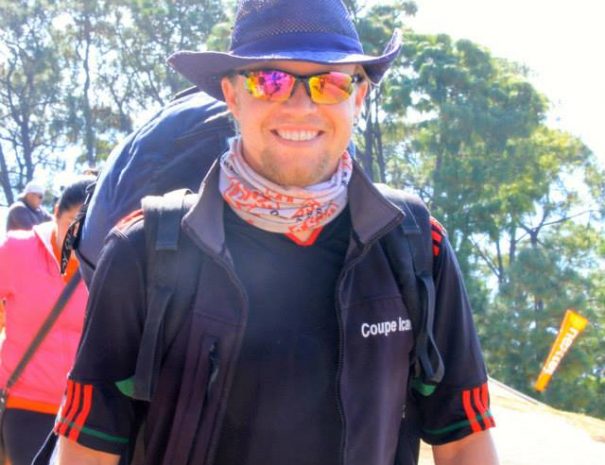
If you have your P2 rating and can launch, fly, and land independently, you are ready to fly Valle de Bravo. El Penon is one of the most beginner-friendly mountain sites in the world - the launch is wide and forgiving, the thermals are consistent and well-organized, and the landing zones are enormous. You do not need to be an expert. You need to be safe, current, and willing to listen to your instructor on the radio.
What Makes El Penon Good for P2 Pilots
Not all flying sites are created equal for newer pilots. Some sites have tight launches, unpredictable conditions, small LZs, or thermals that punish mistakes. El Penon is the opposite of all of those.
- Wide, easy launch. The launch at El Penon is a broad clearing with multiple setup positions. You have room to lay out, room to inflate, and room to abort if something does not feel right. The terrain drops away cleanly and the initial air off launch is generally smooth. Compare this to tight mountain launches where you are threading between trees with 50 feet of clearance - El Penon is forgiving.
- Consistent, readable thermals. The Hair Dryer thermal cycle is one of the most predictable thermal sources in the world. It is not the sharp, violent thermals that scare newer pilots. It is smooth, well-organized lift that you can feel building, enter deliberately, and center with coaching. The consistency is the key - you get the same thermal patterns day after day, which means you develop real skill through repetition, not luck.
- Enormous landing zones. The Piano LZ is 1.5 miles from launch and it is massive. You can see it from the air, the approach is straightforward, and there is so much room that missing it is hard to do. The Beach LZ near town is similarly generous. You are not stress-landing into a postage stamp. You are flying a standard pattern into a field you could land a small airplane in.
- Radio-guided instruction. This is the single biggest advantage of flying Valle de Bravo with Air Damien versus flying anywhere on your own. Damien is on the radio for your entire flight. He calls thermals, coaches your centering, tells you when to leave weak lift and where to find better lift, and talks you through your landing approach. You are never alone up there.
- The Fish Bowl. The primary flying area at El Penon is a contained, manageable space with clear boundaries. You are not flying into unfamiliar terrain or crossing into unknown airspace. The Fish Bowl has known thermal triggers, known wind patterns, and known escape routes. It is the perfect classroom.
What You Should Be Comfortable With
Valle de Bravo is not a learn-to-fly destination. You need your P2 rating and the basic skills that come with it. Specifically:
- Forward and reverse launches. You should be able to launch without someone holding your wing or coaching you through every step. You do not need to be perfect - Damien will help you refine your technique - but you need to be able to get off the ground independently.
- Basic thermal awareness. You do not need to be good at thermalling yet. That is literally what the clinic teaches. But you should understand what a thermal is, have experienced at least a few thermals at your home site, and not panic when your wing gets bumped by lift.
- Landing approaches. Standard pattern flying into a large field. If you can do this at your home site, you can do it at Valle. The LZs here are bigger than most training hills.
- Radio communication. You need to be comfortable wearing an earpiece, listening to instructions while flying, and responding to coaching in real time. This is not complicated but it is essential.
- Basic weather understanding. You should know what wind direction means for launch, how thermals form, and why we do not fly in certain conditions. You do not need to be a meteorologist. Just the basics from your P2 training.
What P2 Pilots Typically Achieve
After 5-10 days at Valle de Bravo with guided instruction, most P2 pilots experience a transformation in their flying that would take months or years at their home site. Here is what we commonly see:
- Confident thermal centering. Most P2s arrive "accidentally finding thermals" - they blunder into lift and circle until they fall out. They leave reading the sky, choosing thermals deliberately, entering with intent, and centering efficiently. This is the single biggest skill jump.
- Extended flights. P2 pilots at their home sites often fly 15-20 minute sleddies. At Valle, they are flying 1-2 hour thermal flights by the end of their first week. The consistency of the thermals means you actually have time to practice and improve within each flight.
- Altitude gains they have never experienced. Climbing 2,000-3,000 feet above launch in a thermal is a new experience for most P2 pilots. At Valle, it happens routinely. The sensation of looking down at the mountain you launched from while still climbing is something you do not forget.
- Comfort in moderate thermal conditions. The thermals at El Penon are stronger than most US training hills but not aggressive. After a week of flying them daily with radio coaching, you develop a comfort level that transfers directly to every other site you fly.
- P3 foundation. Several of our P2 pilots have used their Valle de Bravo trips as the experience foundation for their P3 progression. The combination of hours logged, skills developed, and instructor sign-off on specific maneuvers accelerates the rating process.
Honest Caveats
- Be current. If you have not flown in three months, do a few refresher flights at your home site before coming to Valle. You want to show up with your basic skills sharp, not rusty.
- This is not ground school. If you do not have your P2 yet, Valle de Bravo is not the place to earn it. Get your rating at home, fly your home site enough to be comfortable, then come here to level up.
- The thermals are stronger than your training hill. That is the point - you are here to learn to fly in real thermal conditions. But it means the first day may feel intense. Trust the process and trust your instructor. By day three, what felt strong on day one will feel normal.
- Listen to Damien. If he tells you to sit out a session because conditions are too strong for your level, sit out. No ego. The mountain will be there tomorrow with conditions better suited for your flying. Safety always comes first.
Ready to Level Up?
The thermalling clinic is built for pilots exactly where you are. Five days of focused instruction designed to take P2 pilots from "I can thermal sometimes" to "I can read the sky and choose my climbs." It is the most efficient way to level up your flying.
Or check out the 10 Day Package if you want the full experience - clinic instruction plus additional free-flying days to practice and build hours.
Not sure if you are ready? Call Damien and talk it through. He will give you an honest answer.