
Yes. Valle de Bravo has one of the strongest paragliding safety records of any international flying destination. The site has been hosting pilots for decades, with established launch and landing infrastructure, an active local club, experienced retrieve crews, and predictable flying conditions. That said, paragliding carries inherent risk anywhere you fly it. Here is what you need to know about flying safely in Mexico.
Flying Safety at El Penon
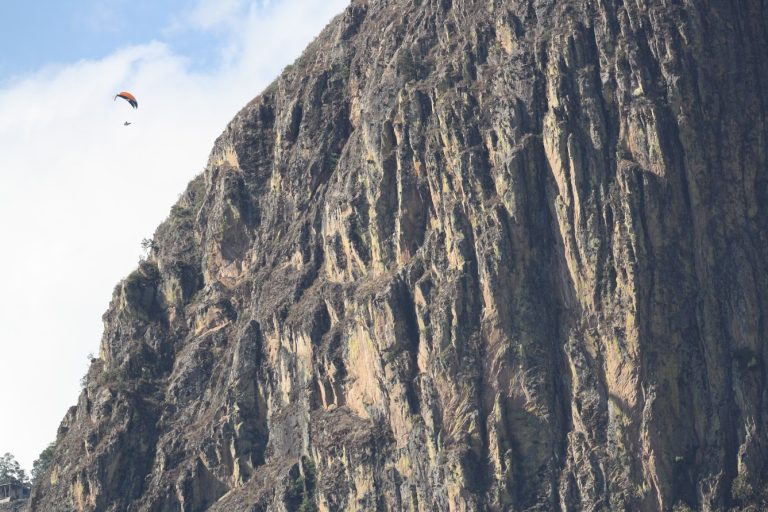
El Penon is not a sketchy backcountry launch. It is a club-managed site with decades of infrastructure development. The launch is wide and well-maintained with room for multiple pilots to set up without crowding. The terrain drops away cleanly, meaning even in light conditions you can get off the mountain without drama.
The landing zones are massive. The Piano LZ is one of the largest in Mexico - you can see it clearly from the air and there is no anxiety about making a tight approach into a postage-stamp field. The Beach LZ near town is similarly generous. Landing out in the surrounding valley is possible, and the terrain is generally open farmland without the power lines, fences, and trees that make landing out stressful at many US sites.
The local club manages launch access, maintains the LZ, and enforces flying rules. Mid-day flying is restricted to experienced pilots (P4+) during strong conditions - this is a safety measure, not arbitrary gatekeeping. See our FAQ page for the full breakdown of club rules.
The Conditions Are Readable
The thermals at El Penon are consistent and well-organized. This is not a site where sharp, unpredictable rotor catches pilots off guard. The Hair Dryer thermal cycle fires at approximately 10:00 AM every day during peak season with remarkable predictability. The thermals are strong enough to be productive but smooth enough that P2 pilots can learn in them safely with radio coaching.
Dangerous paragliding conditions are usually associated with unpredictable weather, sharp wind shear, hidden rotor, or terrain traps. El Penon has none of these in its typical operating conditions. The volcanic terrain creates clean, readable thermal triggers. The wind patterns are well-understood. The flying area (the Fish Bowl) is open and well-mapped. This is why instructors choose this site for teaching - the conditions are manageable and predictable.
Guided vs Solo Flying
The single biggest safety factor for visiting pilots is whether you fly guided or solo. Having a USHPA Advanced Instructor on the radio calling conditions, coaching your thermal decisions, and monitoring your position in real time is a level of safety net that solo flying cannot match.
When you fly with Damien, he watches conditions from the ground or launch, sees changes developing before you do, and can tell you to land before conditions exceed your skill level. He knows the site's specific hazards - where rotor can form in unusual wind directions, where the convergence zones get rough, which areas to avoid on strong days. That knowledge is the product of 25+ years and over 10,000 flights at this specific site.
If you are considering flying Valle de Bravo solo without local knowledge, understand that you are removing the most important safety layer available to visiting pilots.
Medical Care in Mexico
This is the area where most pilots have questions, and the answer is nuanced.
Local care: Valle de Bravo has a hospital that can handle basic injuries - fractures, lacerations, sprains. For anything more serious, you will be transferred to hospitals in Toluca or Mexico City, which have modern medical facilities comparable to what you would find in a mid-size US city.
The payment issue: Mexican hospitals typically require upfront payment before discharge. Your US health insurance will reimburse you, but the hospital wants payment first. This means you need a credit card with sufficient credit available. This is the most important logistical safety preparation for your trip - bring a credit card with headroom.
Travel insurance: We strongly recommend travel insurance with medical evacuation coverage. It is inexpensive ($50-150 for a 10-day trip) and covers the scenario where you need to be evacuated to a different facility. Paragliding-specific insurance is available and worth the cost.
General Travel Safety
Valle de Bravo is not the Mexico you see in border-city news coverage. It is a wealthy, tourist-friendly lakeside town that serves as a weekend getaway for Mexico City professionals. Cobblestone streets, boutique restaurants, and an artisan market. The crime rate is low. Locals are friendly and accustomed to international visitors.
Standard travel precautions apply - do not flash expensive electronics unnecessarily, be aware of your surroundings at night, and keep copies of your passport. But these are the same precautions you would take in any foreign city. Pilots have been traveling to Valle de Bravo safely for decades.
What Damien Brings to Safety
Damien Mitchell is a USHPA Advanced Instructor and trained First Responder with over 25 years of flying experience and more than 10,000 flights. He carries a first aid kit on every session and has managed incidents ranging from minor scrapes to serious injuries over his career.
Every trip begins with a safety briefing covering site-specific hazards, emergency procedures, radio protocols, and what to do in various scenarios (tree landing, water landing, land-out in an unfamiliar field). Clinic participants get daily weather and safety briefings before every session.
Pre-flight gear checks are standard - wing condition, harness setup, reserve repack date (must be within 12 months), and radio functionality are all verified before you fly.
Tree Landings and Land-Outs
Trees exist. You might end up in one. At Valle de Bravo, tree extraction services are available through the local club and retrieve crews. Cost runs $500-800 plus tips depending on the difficulty. This is not a frequent occurrence, but it is a known possibility, and it is handled professionally when it happens.
Land-outs (landing in a field away from the designated LZs) are more common, especially for pilots working on XC skills. Air Damien's retrieve crew tracks pilot positions via GPS and picks you up wherever you land. The surrounding terrain is generally open and landable - you are not flying over dense forest or urban areas.
The Honest Bottom Line
Paragliding is not risk-free. No honest instructor will tell you it is. People get hurt paragliding, and occasionally people die. That is true everywhere in the world, including at your home site.
What Valle de Bravo offers is a site that minimizes the controllable risks: predictable conditions, established infrastructure, wide launches, huge landing zones, and the option to fly with an experienced guide who knows the site intimately. The remaining risk is the inherent risk of the sport itself, which you accepted when you started flying.
Flying with Damien does not eliminate risk. It reduces it substantially through local knowledge, real-time coaching, and decades of experience managing pilots at every skill level in this specific terrain.
Fly with an experienced guide who knows the site and the risks. Book your guided trip or contact Damien to discuss your safety questions.
For more information, read our complete Valle de Bravo guide or our packing guide for trip preparation.