
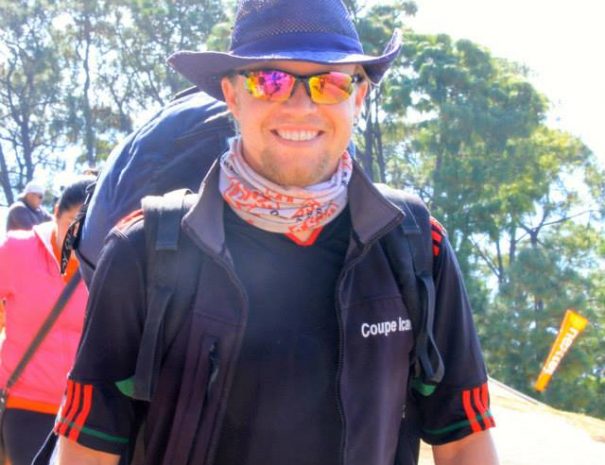
I have flown thousands of flights from El Penon over 25+ years. I have flown Bir Billing, Ibituruna, the Dolomites, and dozens of other sites around the world. El Penon is still the launch I come back to. Not because it is the most dramatic or the highest or the most famous - but because it is the most reliable, the most flyable, and the most rewarding site I know.
The Geology
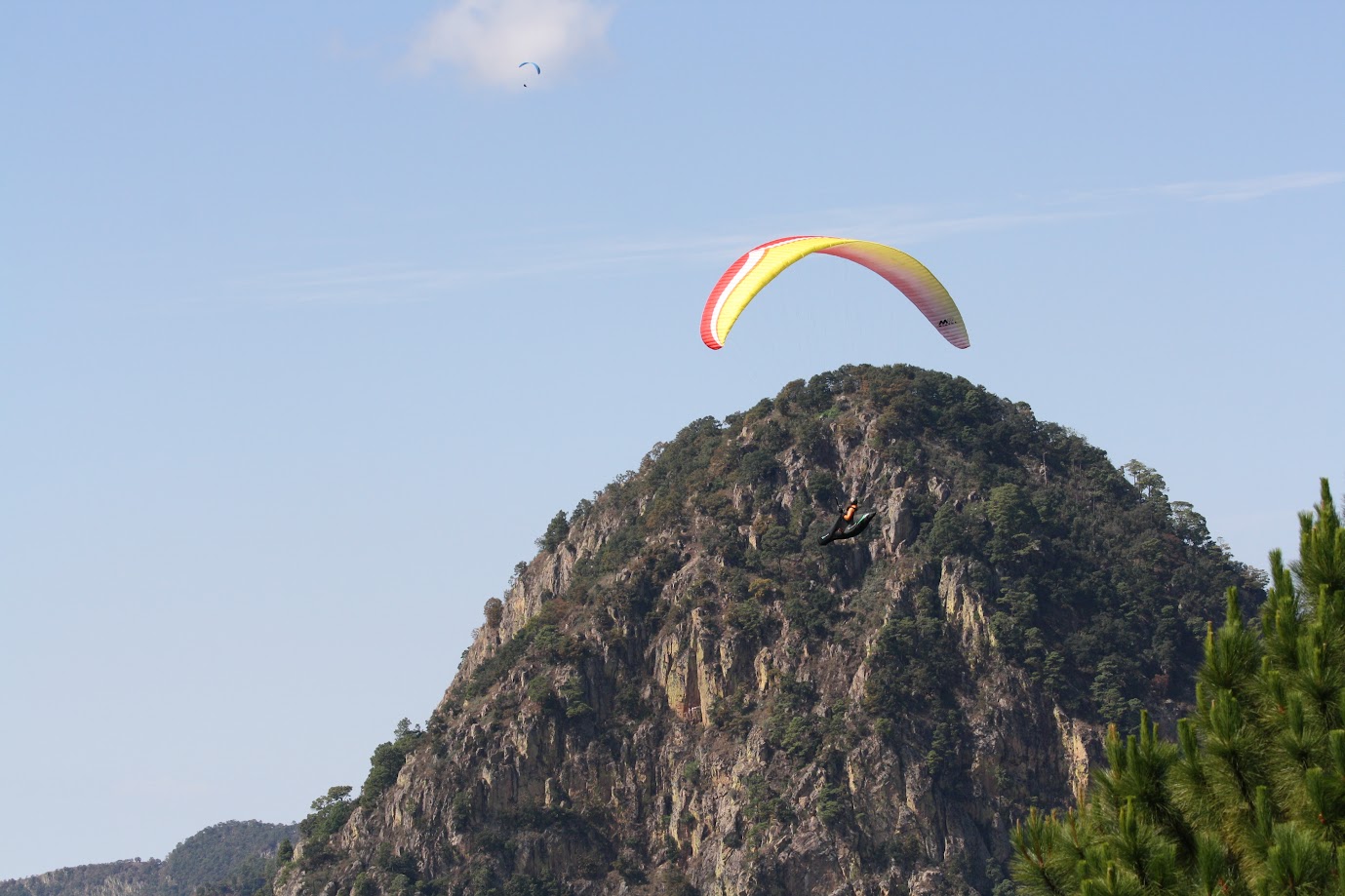
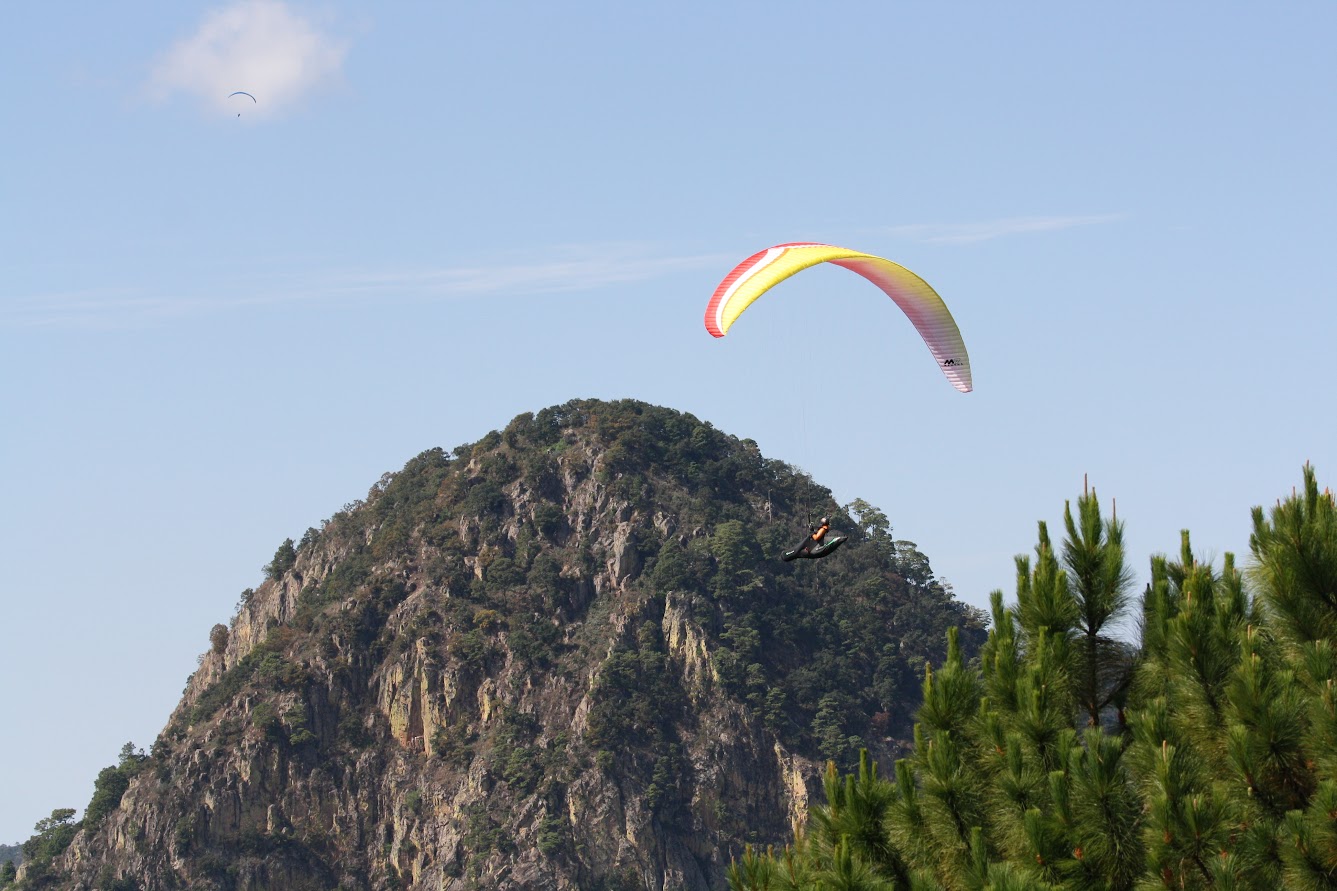
El Penon sits at 7,600 feet (2,316 meters) above sea level on the rim of an ancient volcano. The volcanic geology is not just a scenic detail - it is the reason the site flies the way it does. Dark volcanic rock absorbs solar radiation efficiently, creating strong temperature differentials that generate thermals. The shape of the old volcanic rim creates a bowl-shaped flying area (the Fish Bowl) with multiple thermal triggers arranged in a natural amphitheater.
The rock faces are steep and well-defined, which means thermal triggers are concentrated and predictable. Unlike sites where thermals fire randomly from broad, uniform terrain, El Penon's thermals fire from specific features - ridges, spines, walls, and mesas - that you can learn to read. After a few days, you start knowing where the next thermal is going to come from before it arrives. That predictability is what makes this site so effective for learning and so satisfying for experienced pilots.
The Hair Dryer
The Hair Dryer is the local name for El Penon's daily thermal cycle, and it is the single most distinctive feature of flying here. Every day during peak season (November through March), the cycle kicks on at approximately 10:00 AM with remarkable consistency. You can set your watch by it.
Here is what happens: The morning sun heats the dark volcanic rock faces below and to the sides of launch. As the rock heats, the air in contact with it warms and begins to rise. At a certain point - almost always around 10:00 AM - the accumulated heating reaches a threshold and the first thermals begin to cycle through. Once the Hair Dryer turns on, it sustains for three to five hours, producing a steady stream of usable thermals that pilots ride to altitude.
The physics are straightforward - solar heating of dark rock at altitude in a tropical climate with stable upper-level winds. What makes it special is the consistency. Most sites have "good days" and "bad days." El Penon has "the day" - a thermal cycle that repeats with minor variations, day after day, week after week, throughout the entire flying season. This is why thermalling clinics work so well here. You do not waste days waiting for conditions. You fly every day.
The Fish Bowl
The Fish Bowl is the primary flying area directly in front of launch. It is a bowl-shaped section of volcanic terrain that includes ridges, spines, walls, small volcanic mesas, and a prominent rock feature called "The Rock." Think of it as a natural amphitheater with multiple thermal sources arranged around the edges.
Each feature in the Fish Bowl has its own thermal character. Some ridges trigger first in the morning when the sun angle is low. Others fire later when the sun hits them more directly. The walls produce stronger thermals on hot days. The mesas create convergence zones where different air masses meet and produce reliable lift. Learning to read the Fish Bowl - understanding which features trigger when, how the thermals move and lean through the day, and where the strongest lift tends to develop - is a significant part of what a thermalling clinic here teaches.
For experienced pilots, the Fish Bowl is a playground. For learning pilots, it is a classroom. Either way, it is a contained, manageable area where you always know where you are relative to the LZs and launch. You are not flying into unknown terrain. You are working a system you can learn and master.
The Piano LZ
The Piano gets its name from its shape when viewed from the air - a piano-shaped field approximately 1.5 miles from launch. It is one of the most forgiving landing zones you will ever fly into. Wide, flat, with approaches possible from multiple directions, and large enough that you cannot miss it unless you are trying to.
For visiting pilots, especially those coming from sites with tight, technical landing zones, the Piano is a relief. You do not stress about your approach. You fly your pattern, set up your final, and land with room to spare. This matters more than most people realize - when you are not anxious about landing, you fly better in the air. You make better thermal decisions because you are not thinking about the approach the whole time.
The Beach LZ
The Beach LZ sits on the shore of Lake Avandaro, near the town center at Marina Nacional 202. It is the social hub of the flying community - where pilots gather after flights, where the retrieve van drops you off, and where Mari's taco stand serves the best post-flight tacos in paragliding. The approach is straightforward and the field is generous.
Late afternoon glass-off flights often end at the Beach LZ, and watching the sun set over the lake after a final flight of the day is one of those moments that sticks with you. The combination of the flying, the scenery, and the community at the Beach LZ is a big part of what makes Valle de Bravo special as a destination, not just a flying site.
A Thermal Day at El Penon
A typical flying day follows a predictable arc:
- Early morning (7-9 AM): Calm. Cool air settles in the valley. The rock faces are cold from the night. You eat breakfast, do ground school, and drive to launch.
- Late morning (9-10 AM): The sun heats the rock. You start to feel light cycles at launch - puffs of warm air that signal the Hair Dryer is warming up. Pilots lay out their wings and watch the indicators.
- The cycle begins (~10 AM): The first usable thermal comes through. Early risers launch and climb out. Within 30 minutes, the cycle is fully established and thermals are firing from multiple triggers across the Fish Bowl.
- Midday (11 AM - 1 PM): Peak conditions. Thermals are at their strongest and most frequent. This is when most climbing and XC happens. The sky fills with gliders working the lift.
- Early afternoon (1-3 PM): Still good but starting to ease. Thermals become wider and gentler. Some pilots push for final XC distance, others fly back to the Piano or Beach LZ.
- Late afternoon (4-5 PM): The glass-off. Thermals die but the air becomes silky smooth. If there is enough residual lift, you can soar quietly in the last light of the day. This is the most beautiful time to fly at El Penon.
This cycle repeats - with minor variations - every flyable day during peak season. The predictability is what lets you plan, learn, and progress. Read our monthly condition guides for specific details on how each month differs.
How the Lake Affects Conditions
Lake Avandaro sits at the base of El Penon and has a measurable effect on flying conditions. The lake heats more slowly than the surrounding rock and land, creating a temperature differential that drives a gentle lake breeze in the late morning and early afternoon. This breeze interacts with the thermal cycle to create convergence zones where the rising thermal air meets the cooler lake-influenced air.
These convergence zones are where some of the strongest and most reliable lift occurs. Experienced pilots who understand the lake effect can use these zones to extend their flights and gain altitude at the edges of the Fish Bowl. It is one of the subtleties of flying El Penon that Damien teaches in the XC clinic.
Come See for Yourself
El Penon is not just a flying site. It is a system - geology, meteorology, terrain, and community working together to create one of the most consistent and rewarding paragliding experiences on earth. You can read about it, watch videos of it, and study the weather data. But none of that compares to standing on launch at 7,600 feet, watching the Hair Dryer turn on, and stepping off the mountain into your first Valle de Bravo thermal.
Book your trip to El Penon or browse our photo gallery for a preview of what is waiting.